Compression Therapy and Recovery in Nashville: How It Works, Where to Go
A guide to compression therapy and active recovery in Nashville: what dynamic compression does, what the evidence supports, how it compares to other recovery tools, and where to get it.
Compression therapy uses dynamic, sequential air pressure to move fluid through the legs and limbs, turning recovery from passive rest into something active and deliberate. It is one of the most accessible recovery tools available, popular with athletes, travelers, and anyone whose legs feel heavy after long days. This guide explains how compression actually works, what the evidence does and does not support, how it fits alongside other recovery methods, and where to get it in Nashville.
What is compression therapy, and how does it work?
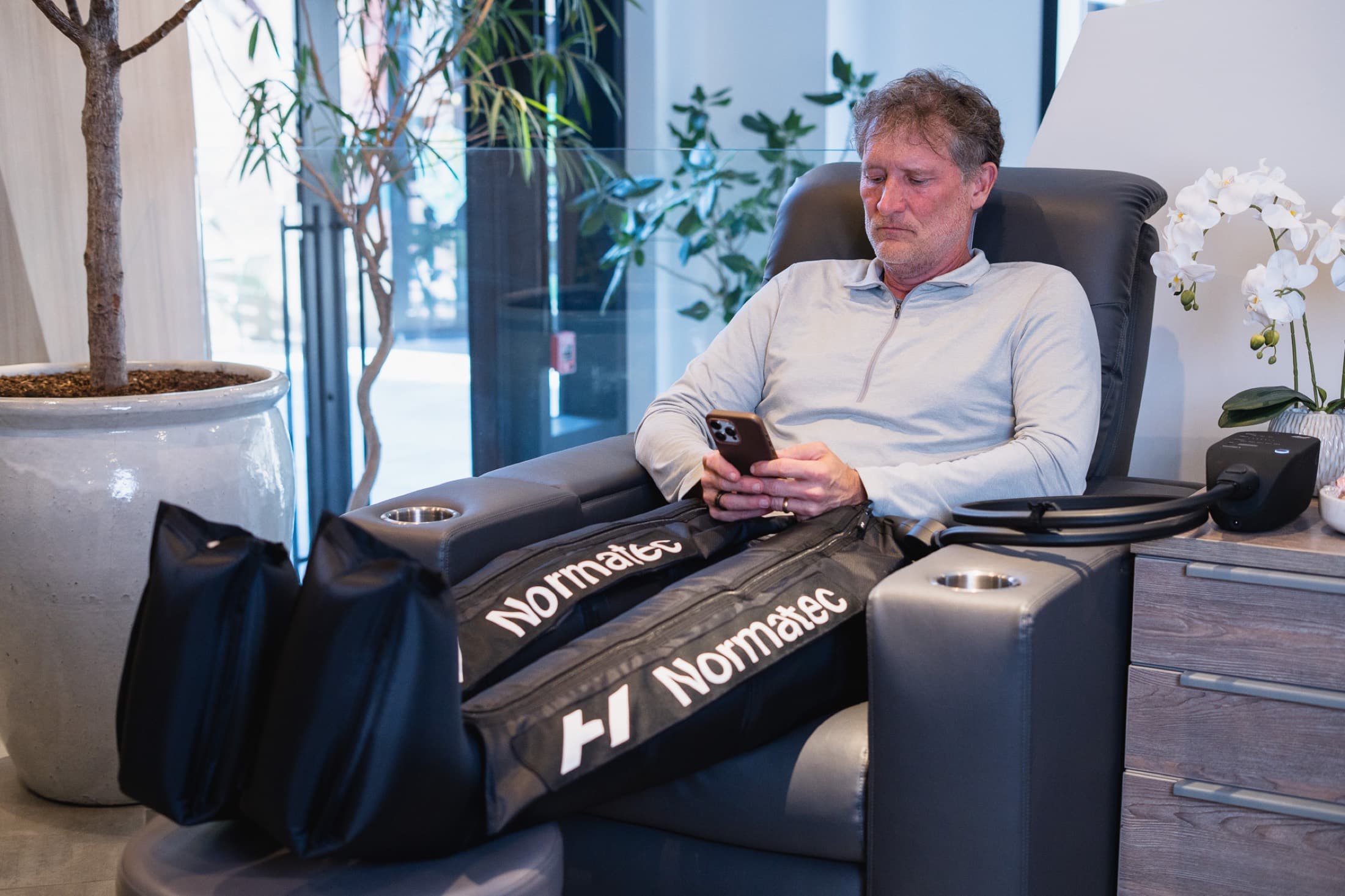
Modern recovery compression uses sleeves that wrap the legs (and sometimes arms or hips) and inflate in timed, sequential waves. Instead of squeezing everywhere at once, the chambers fill from the far end inward, creating a moving pressure gradient that pushes fluid in the direction your body already wants it to go: back toward the core.
That direction is the key. After hard effort, long travel, or a day on your feet, fluid and metabolic byproducts pool in the tissue, and the heaviness you feel is partly that pooling. The venous and lymphatic systems clear it, but they rely on movement and muscle contraction to do so. Dynamic compression stands in for that movement, giving the circulatory and lymphatic systems a rhythmic assist while you sit still.
The felt result is usually immediate and pleasant: legs feel lighter, less swollen, and less tired. Whether that translates into measurably faster physiological recovery is a more nuanced question, and worth being honest about.
What does the evidence actually show?
Here the picture deserves a straight answer rather than a sales pitch. The strongest and most consistent evidence for dynamic compression is around perceived recovery: people reliably report less soreness, less fatigue, and lighter legs after sessions, and that subjective benefit is real and repeatable. Compression also clearly moves fluid and supports circulation, which is why it is used clinically for swelling and lymphatic issues well beyond the athletic world.
Where the evidence is thinner is the harder performance claims, like dramatically faster muscle repair or large next-day performance gains. Studies are mixed, and effects, where found, tend to be modest. So the honest framing is that compression is excellent at making recovery feel better and at clearing the heaviness that follows effort, and it is a genuine, low-risk aid, but it is not a magic accelerant that rebuilds tissue on its own.
Recovery is not the same as rest. Rest is the absence of work; recovery is what the body does with that absence, and compression is one way to help it do more.
That distinction matters because it sets realistic expectations. Used regularly, compression is a comfortable, effective complement to training and travel. Treated as a substitute for sleep and sensible load management, it will disappoint.
How is compression different from just putting your legs up?
Elevating your legs uses gravity, and it helps. Dynamic compression adds an active, sequential pump on top of gravity, moving fluid more deliberately and over a larger volume of tissue than stillness alone. The difference is roughly between letting a drain empty on its own and gently pushing the water toward it.
For most people the practical upshot is that a twenty-to-thirty-minute compression session does in one sitting what hours of passive elevation would do partially, and it reaches the whole limb rather than just whatever is below your heart. It is also simply easier to actually do, which is half of why any recovery habit works.
What does a compression session feel like?
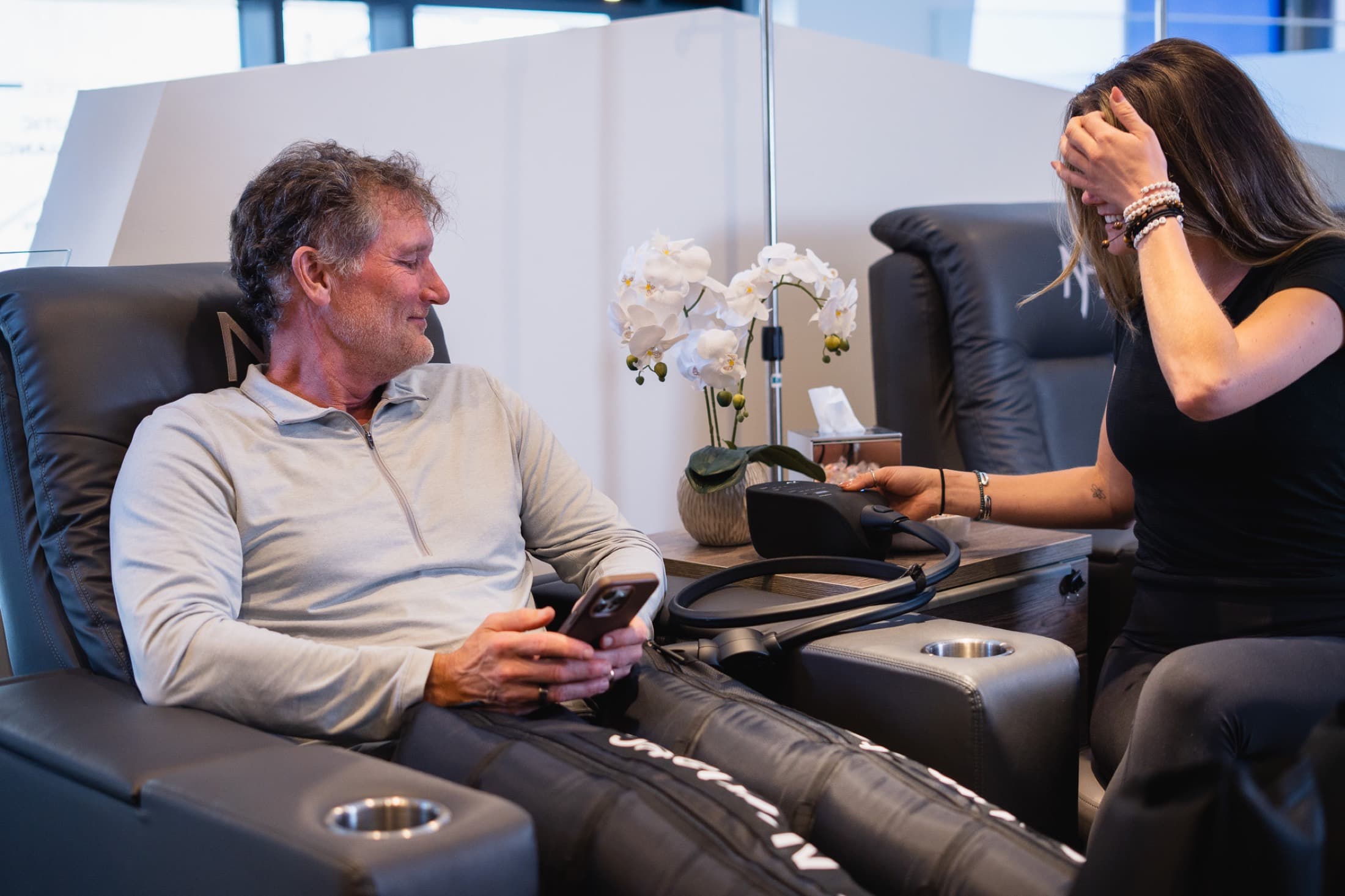
You settle into a chair, slide into the sleeves, and the system runs a program of inflating and releasing waves for twenty to thirty minutes. The pressure is firm but comfortable, adjustable to your tolerance, and most people find it genuinely relaxing, closer to a slow massage than anything clinical. You can read, work, or close your eyes. You stand up with noticeably lighter legs.
There is no recovery time and nothing to manage afterward, which is part of why it folds so easily into a routine, whether after a workout, before a flight, or at the end of a long day.
How does compression fit with other recovery methods?
Compression is one tool in a larger recovery toolkit, and it pairs naturally with the others rather than competing with them. Each works on a different mechanism, which is why stacking them thoughtfully tends to beat relying on any one.
Hyperbaric oxygen therapy works on oxygen delivery and inflammation at the cellular level. Whole-body cryotherapy uses cold to blunt inflammation and lift mood after effort. Compression works on circulation and fluid clearance. A sensible recovery plan might use compression after most sessions for the circulatory benefit, with cold or oxygen work layered in around the heaviest training blocks. For some people, targeted peptide therapy enters the picture where there is a specific repair goal, though that is a clinical decision, not a default.
The point is not to do everything. It is to match the tool to what the body actually needs that week, which is easier when recovery is treated as deliberate rather than an afterthought.
Who is compression recovery for, and who is it not for?
It suits a wide range of people: athletes managing training load, anyone who travels often and arrives with swollen legs, people on their feet all day, and those who simply recover slowly and want an easy, effective assist. Because the risk profile is low, it is one of the more broadly appropriate recovery tools.
There are sensible cautions. Dynamic compression is generally avoided or cleared with a physician first if you have deep vein thrombosis or a suspected clot, severe peripheral artery disease, certain heart-failure conditions, an active infection or open wound in the area, or acute swelling that has not been evaluated. If you are not sure whether a medical condition applies, that question belongs with a clinician before your first session. For the healthy majority, it is as low-stakes as recovery tools get.
Where can I get compression therapy in Nashville?
Compression shows up in a lot of places around Nashville, from gym recovery corners to dedicated recovery studios to wellness clinics, and the hardware is broadly similar. What varies is the setting and whether it sits inside any larger plan for how you recover and perform.
Next Health Nashville offers compression and active recovery at both of its locations, The Gulch (616 8th Ave South) and Green Hills (3710 Hillsboro Pike), as part of a wider performance and longevity approach rather than a standalone drop-in, so recovery is placed alongside testing, training support, and the other modalities when that makes sense for you. You can read more on the compression and recovery page, and the booking box below has both locations and phone numbers.
Wherever you go, compression is hard to get wrong on its own, so the question is less about the machine and more about the context: Is this just a chair to rent, or part of a plan for how you actually recover? For a lot of people the drop-in is perfectly fine. For those chasing a real performance or longevity goal, the context is where the value is.