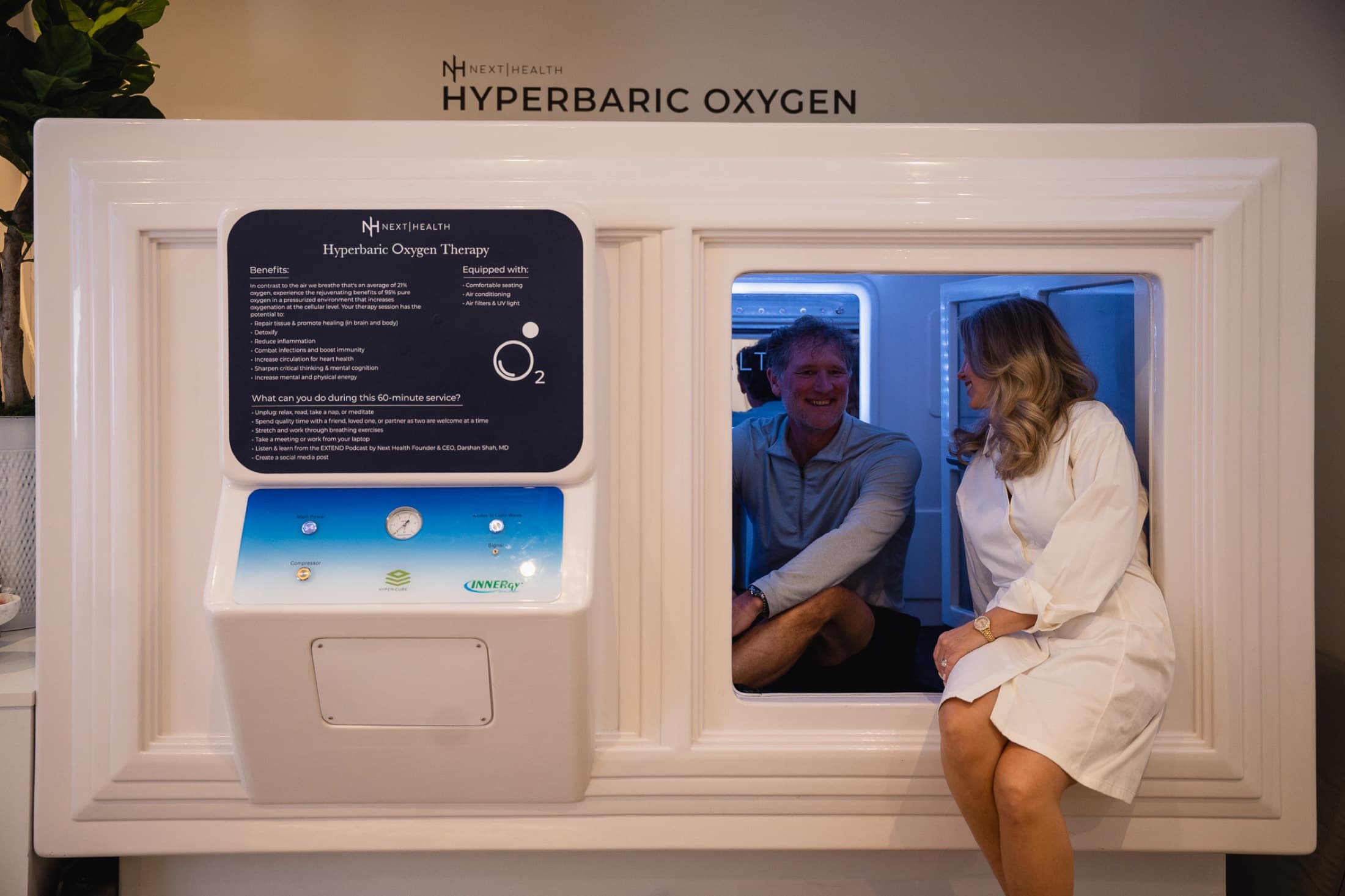
The Depth at Which Healing Begins: On Oxygen, Plasma, and the Physics of Recovery
Hyperbaric oxygen therapy works not by flooding the lungs but by rewriting where oxygen travels — a physics lesson with profound biological consequences.
There is a version of recovery that most of us have been practicing our whole lives — rest, rehydrate, sleep, repeat. It is not wrong. The body is genuinely capable, given time and adequate resources, of extraordinary self-repair. But there is a limit built into that system, and the limit is anatomical. Hemoglobin, the protein that ferries oxygen through the bloodstream, can only carry so much. It operates, under normal atmospheric conditions, near its maximum saturation. What it cannot do is go where the vessels thin out, where tissue has been damaged, where circulation has been quietly compromised for years. Those regions persist in a state of low-level oxygen debt — not enough to produce crisis, but enough to impair the quiet, continuous work of cellular maintenance.
Hyperbaric oxygen therapy intervenes at precisely that point. And the mechanism is not biological — it is physical.
What Pressure Does That Biology Cannot
Henry's Law, a foundational principle in gas physics, holds that the amount of gas dissolved in a liquid increases in direct proportion to the pressure above it. This is why carbonated water is fizzy under the sealed cap and flat once opened — the pressure that held the carbon dioxide in solution is gone. The same logic applies to oxygen and blood plasma. Under normal atmospheric conditions, almost no oxygen dissolves into the plasma itself; hemoglobin handles the transport, and the plasma is largely a passive medium. But inside a hyperbaric chamber — where the pressure rises to one and a half to three times the atmospheric norm — oxygen begins dissolving directly into the plasma, the lymph, the cerebrospinal fluid, the synovial fluid of the joints. It no longer depends on hemoglobin or intact blood vessel delivery. It diffuses.
This is the distinction that matters. Diffusion-based delivery reaches territory that circulation-dependent delivery cannot. Tissues that have been operating in chronic oxygen deficit — whether due to injury, inflammation, aging vasculature, or accumulated micro-damage — begin receiving therapeutic concentrations of oxygen through a route that bypasses their structural limitations entirely.
The body doesn't always fail to heal because it lacks the will. Sometimes it simply lacks the reach.
The physiological response to this oxygen abundance is layered. Mitochondria — the organelles responsible for converting fuel into usable cellular energy — become measurably more efficient. Cells that have been subsisting in a low-energy, low-repair state begin synthesizing proteins again, restoring functions that had quietly degraded. At the same time, elevated oxygen levels modulate key regulatory proteins: hypoxia-inducible factor-1 alpha, which governs how cells behave under oxygen scarcity, is essentially reset — shifting tissue from a chronic survival posture back toward a regenerative one. Nuclear factor kappa B, a central driver of the inflammatory cascade, is suppressed — producing anti-inflammatory effects that research suggests persist well beyond the session itself.
The Recovery Signal That Keeps Transmitting
What makes hyperbaric oxygen therapy particularly interesting from a longevity perspective is that its effects are not simply mechanical. The chamber is not just an oxygen delivery system — it appears to be a signaling event. The body responds to the pressurized oxygen environment the way it responds to other forms of measured biological stress: by activating repair pathways that would otherwise remain dormant.
Stem cell mobilization is among the more studied of these downstream responses. Research has associated repeated HBOT sessions with meaningful increases in circulating stem cells and endothelial progenitor cells — the cells involved in vascular repair and tissue regeneration. This is relevant not only for acute recovery after exertion or injury, but for the slower, less dramatic erosion that characterizes biological aging. The vasculature thins and stiffens over decades. Tissue repair becomes less efficient. The oxygen debt grows incrementally, in ways that rarely announce themselves as a single symptom.
A recent framework published in Aging Cell by Donega et al., 2026 proposes examining the relationship between oxygen physiology and the biology of aging as an integrated system — recognizing that the mechanisms governing how cells respond to oxygen availability are deeply intertwined with the drivers of age-related decline. Hyperbaric oxygen therapy sits naturally within that framework: an intervention that works not by introducing a foreign agent, but by restoring a condition — adequate oxygen delivery to every tissue — that the body was always designed to have.
The practical implications range across recovery contexts. Athletes have used HBOT to accelerate muscle repair and reduce inflammation following intense training loads. Researchers have examined its potential in cognitive recovery, wound healing, and the modulation of neuroinflammation. Each of these applications draws on the same core mechanism: oxygen, delivered by pressure, reaching places it otherwise cannot go.
The Longer Arc
There is something worth sitting with in the basic premise of this therapy. The body is not a machine that wears down uniformly. It wears down unevenly — in the places that get the least attention, the least circulation, the least oxygen. The regions that have been quietly rationing energy for years, compensating for deficits that never showed up on a standard panel, adapting to a state of insufficiency that passes for normal because it arrived gradually.
Hyperbaric oxygen therapy is, in that sense, a form of reckoning. It does not treat a disease. It addresses a condition — one that may be so common, and so slow-moving, that most people have forgotten it was ever otherwise. What it offers is not a correction from the outside, but a restoration from within: the body, given the raw material it was always meant to have, resuming the repair work it was always designed to do. That is not a small thing. It may, in fact, be exactly where recovery — real recovery, the kind that compounds over time — actually begins.