The Quiet That Follows the Pressure: On Oxygen, Latency, and the Body's Deferred Repair
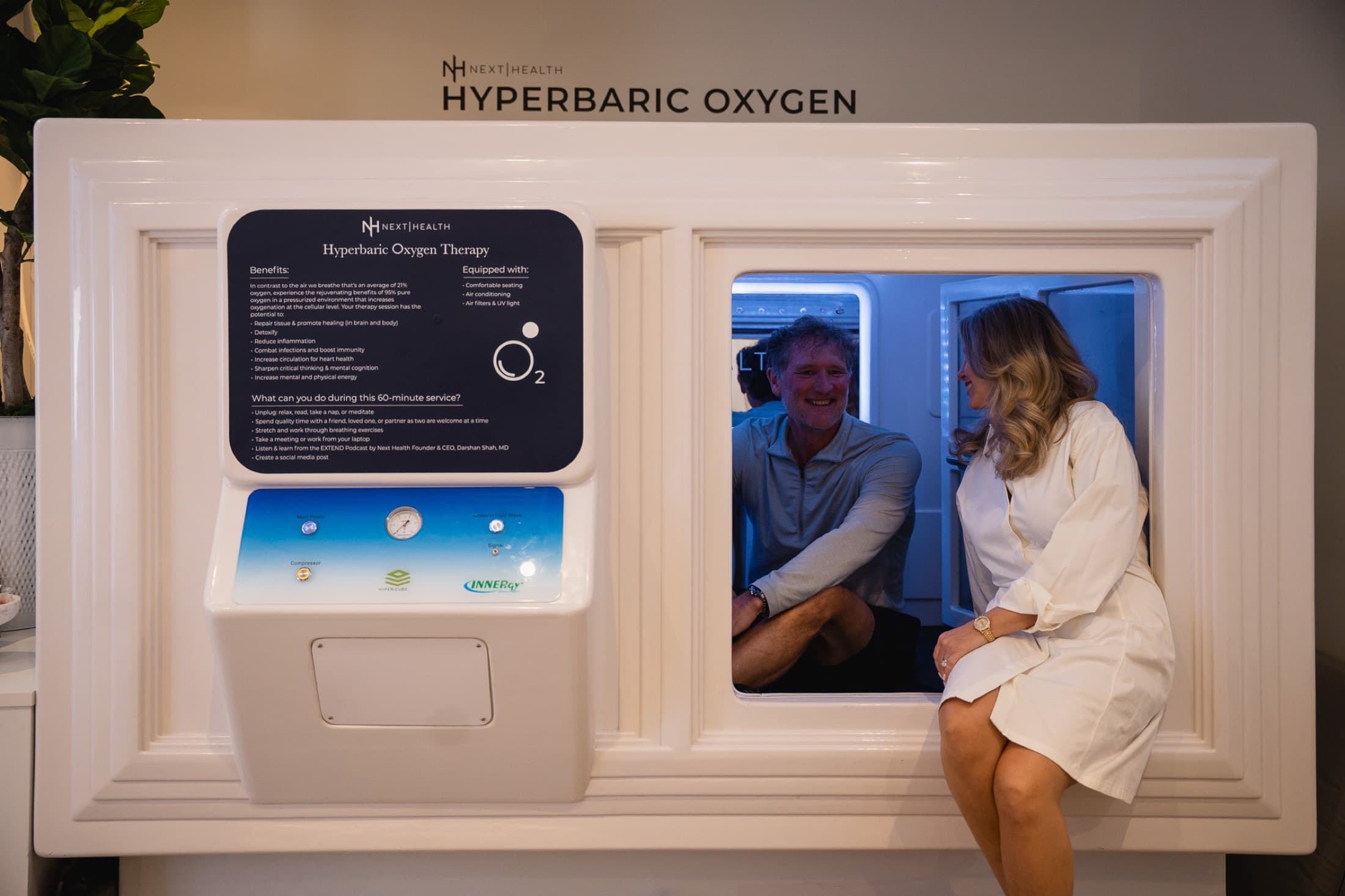
Hyperbaric oxygen therapy doesn't just flood the body with oxygen — it triggers a cascade of repair signals that continue working long after the chamber door opens.
There is a particular kind of recovery that doesn't announce itself. No soreness, no visible response, no moment where the body clearly signals that it has changed. The work happens in the hours and days after the intervention — in the mitochondria, in the plasma, in tissues that have been waiting, quietly and chronically, for a signal they didn't know how to ask for. Hyperbaric oxygen therapy is, among other things, a study in that kind of latency. What happens inside the chamber matters. What happens after is what makes it interesting.
Most people encounter hyperbaric oxygen therapy through its oldest and most dramatic application — treating decompression sickness in divers, or accelerating wound healing in patients with compromised circulation. These uses are well-established and uncontroversial. But they have, for a long time, framed the therapy as something corrective and acute: a tool for situations where oxygen delivery has failed in obvious ways. What the research increasingly suggests is that this framing is too narrow. The mechanism that makes pressurized oxygen useful in crisis appears to be the same mechanism that makes it relevant to the slower, subtler deficits that accumulate in ordinary aging.
The Physics Behind the Biology
The key to understanding HBOT is Henry's Law — a principle from physical chemistry that describes how gases dissolve into liquids under pressure. Under normal atmospheric conditions, the hemoglobin in your red blood cells carries the vast majority of the oxygen in your blood, and that system is already close to saturation. There is almost no free oxygen dissolved in the plasma itself. But raise the ambient pressure — as a hyperbaric chamber does, typically to 1.5 to 3 times normal atmospheric pressure — and oxygen begins dissolving directly into the plasma, the lymph, the cerebrospinal fluid, and the synovial fluid of the joints.
This matters because plasma-dissolved oxygen doesn't depend on blood vessel integrity to reach its destination. It moves by diffusion. Tissues where circulation is compromised — inflamed, scarred, or simply aging tissue where capillary density has declined — can receive therapeutic oxygen through a route that bypasses the usual delivery bottlenecks. The cell that hasn't been adequately oxygenated in years suddenly finds itself in a fundamentally different environment.
"Tissues that have been operating in chronic deficit don't announce it. They simply downregulate — doing less, repairing less, producing less — until a threshold is crossed that shows up on a test or as a symptom."
What the Chamber Triggers — and What It Leaves Behind
The acute physiology of an HBOT session is well-documented. Plasma oxygen levels rise to concentrations ten to fifteen times higher than what is achievable breathing normal air. Mitochondria respond by producing ATP more efficiently. Cells shift from a survival-mode metabolic pattern back toward normal regenerative function. But the more durable effects are the ones that persist after the pressure equalizes and the session ends.
Research has consistently shown that HBOT modulates several key regulatory systems in ways that outlast the session itself. It appears to suppress nuclear factor kappa B (NF-κB), one of the central drivers of the inflammatory cascade, producing anti-inflammatory effects that extend well beyond the immediate intervention. It influences hypoxia-inducible factor-1 alpha (HIF-1α), a master regulator of how cells respond to oxygen availability — essentially resetting this system from a chronic low-oxygen posture back toward one oriented around repair and regeneration.
Perhaps most compellingly, research suggests that repeated HBOT sessions are associated with meaningful increases in circulating stem cells — the body's own reservoir of regenerative potential. A proposed mechanism involves the alternating pressurization and depressurization cycle, which appears to function as a kind of hormetic signal, prompting the bone marrow to mobilize progenitor cells in a way that a single sustained oxygen environment would not. The body, in other words, responds not just to the oxygen, but to the pattern of its delivery.
The cumulative picture that emerges from the literature is one of a therapy whose effects are largely downstream and deferred — which is precisely why a single session, while physiologically meaningful, tells an incomplete story. The adaptive responses take time to consolidate. The anti-inflammatory shifts compound across sessions. The tissue that was too compromised to benefit from the first exposure may be responsive to the fifth or the tenth, after early sessions have begun restoring the vascular and cellular conditions that make further repair possible.
There is something almost counterintuitive about a recovery modality whose most important effects are invisible and delayed. We are accustomed to interpreting recovery through sensation — the muscle that no longer aches, the joint that moves more freely, the clarity that arrives the morning after rest. Hyperbaric oxygen therapy asks for a different kind of attention: not to how you feel immediately after, but to the trajectory over weeks, to the patterns of energy and resilience that emerge when the cellular environment has genuinely shifted. That slower, quieter arc is, in many ways, the more honest measure of what the body is capable of when it's given the conditions it needs to remember how to repair itself.