The Atmosphere Between Stimulus and Response: How the Body Uses Oxygen to Decide What to Repair
Under elevated pressure, oxygen dissolves into plasma and reaches tissues that circulation alone cannot serve — and what the body does with that abundance is stranger and more elegant than simple fueling.
There is a version of recovery most of us understand intuitively: rest, eat, sleep, repeat. The body is tired; the body needs time. That framework is not wrong, exactly — but it is incomplete in a way that becomes more consequential the older we get, and the more seriously we take the question of what full recovery actually means at a cellular level.
Oxygen sits at the center of that question in a way that tends to surprise people who haven't looked closely at the physiology. We think of oxygen as fuel — something we breathe in and burn, the way a fire consumes air. But oxygen is also a signal. It tells cells what state the world is in, what resources are available, and critically: whether now is a time to repair or a time to merely survive.
When Survival Mode Becomes the Default
Chronic, low-grade oxygen deficiency in tissues is more common than most people realize. It doesn't announce itself. It doesn't produce the acute distress of true hypoxia. Instead, it quietly accumulates in damaged tissue, inflamed joints, brain regions that have lost some of their capillary density with age, and areas where circulation has been subtly compromised by years of sedentary habits, old injuries, or metabolic dysfunction.
In those conditions, cells don't stop working — they adapt. A master regulator called hypoxia-inducible factor-1 alpha, or HIF-1α, shifts the cellular program away from regeneration and toward conservation. Protein synthesis slows. Repair is deferred. Inflammation, rather than resolving cleanly, tends to persist at a low simmer because the molecular machinery that resolves it requires oxygen to function.
The body under chronic oxygen debt is not resting — it is waiting, and the wait has a cost.
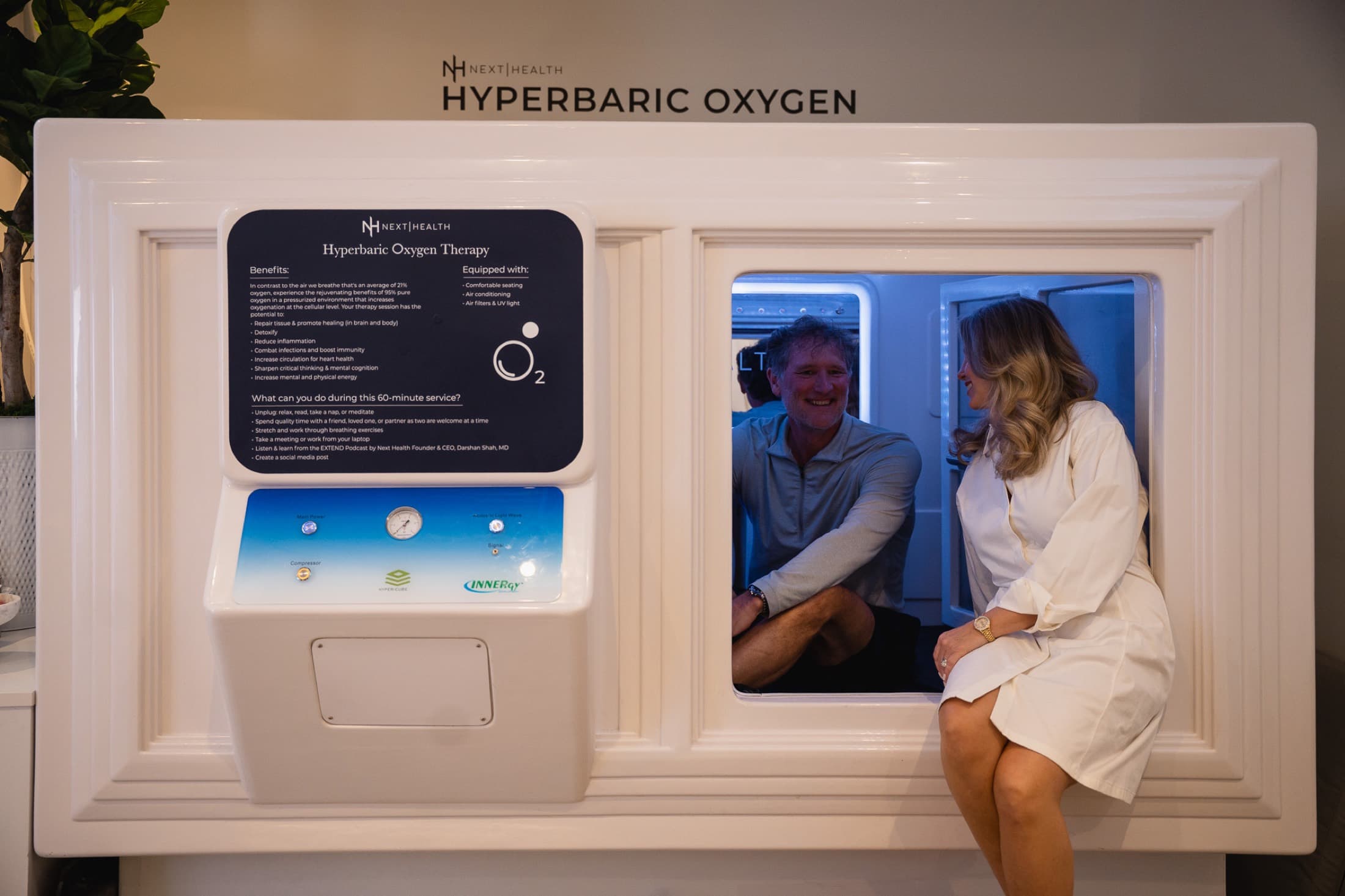
This is the context that makes hyperbaric oxygen therapy interesting not just as a recovery tool, but as a kind of biological reset. Under elevated atmospheric pressure — typically between 1.5 and 3 times the pressure at sea level — oxygen behaves differently in the body than it does under normal conditions. Rather than binding exclusively to hemoglobin (which is already nearly saturated under ordinary breathing), oxygen dissolves directly into the blood plasma, cerebrospinal fluid, lymph, and synovial fluid. It reaches tissue through diffusion, independent of the integrity of blood vessels. Regions that have been running low on oxygen for years begin receiving therapeutic concentrations again.
What the Cell Does With Abundance
The cellular response to this sudden oxygen availability is worth understanding on its own terms — not as a marketing claim, but as a genuine piece of physiology.
Mitochondria, the organelles responsible for producing ATP (the body's primary energy currency), are sensitive to oxygen concentration in ways that go far beyond simply burning more fuel. When plasma oxygen rises dramatically — research suggests it can reach concentrations ten to fifteen times higher than those achievable through normal breathing at sea level — mitochondrial efficiency improves, and cells that have been operating in conservation mode begin recovering their capacity for protein synthesis and functional repair.
Simultaneously, elevated oxygen appears to suppress the activity of NF-κB, one of the most important drivers of the inflammatory cascade. The anti-inflammatory effect this produces isn't merely symptomatic relief — it reflects a genuine shift in the signaling environment that governs how tissue heals. HIF-1α, the survival-mode regulator mentioned earlier, is essentially recalibrated. The cell receives information that the oxygen drought is over, and it adjusts its priorities accordingly.
What this looks like in practice is a recovery process that runs differently — and, research suggests, more completely — than rest alone can provide. A few of the mechanisms that appear to be involved:
- Stem cell mobilization: Pressurized oxygen has been associated with increased circulating stem cells, which play a role in tissue regeneration.
- Collagen synthesis: The oxygen-rich environment may support the production of collagen, relevant to connective tissue repair and skin integrity.
- Neurological recovery: The brain is metabolically expensive and highly sensitive to oxygen availability; some of the most compelling emerging research involves cognitive function and neuroprotection.
- Angiogenesis: Repeated sessions appear to be associated with the formation of new blood vessels in oxygen-deprived tissue — meaning the benefit may compound over time.
The Compounding Nature of the Intervention
This last point is where hyperbaric oxygen therapy diverges most sharply from the intuitive model of recovery as a passive process. The benefit is not simply a function of oxygenating tissue during the session — it is also about the signals that oxygen triggers after the session ends, and the structural changes those signals initiate over a course of treatment.
This is why the research on HBOT tends to look at protocols of multiple sessions rather than single exposures. The body's response to pressurized oxygen appears to be cumulative — each session building on the biological changes initiated by the last, gradually shifting tissue from a state of chronic oxygen debt and deferred repair toward something closer to genuine regeneration.
That shift, quiet and measurable rather than dramatic and immediate, is perhaps the most honest way to understand what hyperbaric oxygen therapy offers. Not a single corrective event, but a recalibration of the conditions under which the body decides what kind of work it is capable of doing. The stimulus is pressure and oxygen. The response is, in the most literal sense, the body remembering what repair is supposed to feel like when resources are finally sufficient to do it right.