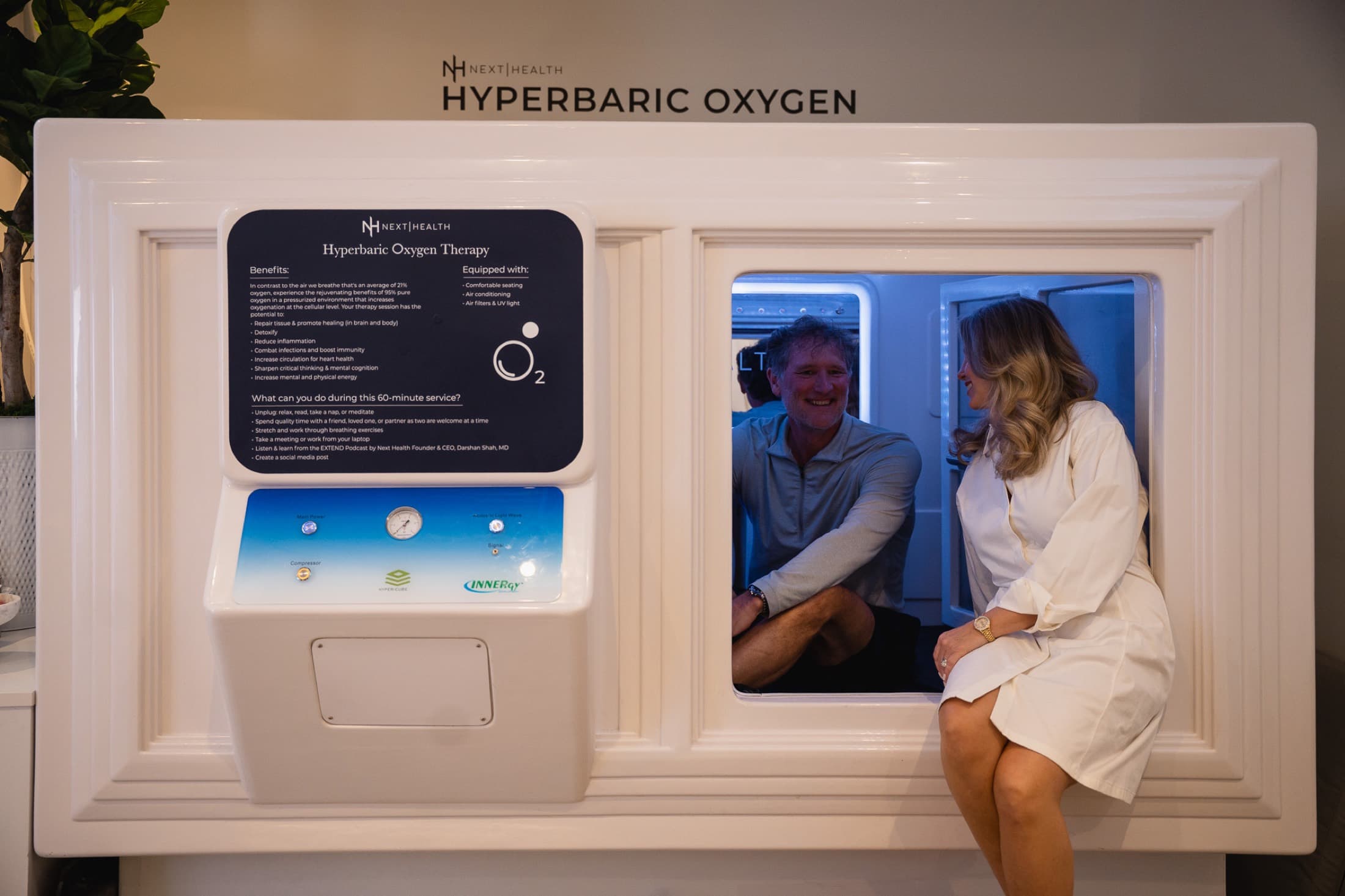
The Tissue That Couldn't Be Reached: How Pressure Unlocks a Different Kind of Delivery
Most oxygen therapies work within the limits of circulation. Hyperbaric oxygen therapy works around them — reaching tissues through physics rather than blood flow alone.
There is a quiet geography inside the body that conventional medicine rarely thinks about — not the highways of arteries and veins, but the slow, diffuse territory between them. The interstitial spaces. The synovial fluid cushioning a damaged joint. The cerebral tissue downstream of a vessel that has narrowed with age. The edges of a wound where circulation arrives late, if at all.
Most recovery tools work by improving what moves through blood vessels. Hyperbaric oxygen therapy does something structurally different: it bypasses the vessel entirely.
What Changes When You Add Pressure
Under ordinary conditions, the body carries oxygen in two ways. The vast majority binds to hemoglobin in red blood cells — a system that, in a healthy person at sea level, runs near its maximum capacity. A small fraction dissolves directly into the plasma, but that fraction is almost negligible. There simply isn't enough atmospheric pressure to push much more gas into solution.
Henry's Law, a foundational principle of gas physics, tells us that the amount of gas dissolved in a liquid increases proportionally with the pressure applied to it. A hyperbaric chamber applies that principle to biology. At 1.5 to 3 times normal atmospheric pressure, with the patient breathing pure medical-grade oxygen, plasma oxygen levels can rise to ten or fifteen times what is achievable breathing ordinary air. At those concentrations, oxygen stops depending on hemoglobin transport. It diffuses — through plasma, through lymph, through cerebrospinal fluid, through synovial fluid — reaching tissues by physical law rather than by the patency of blood vessels.
This is the distinction that makes hyperbaric therapy genuinely unusual among recovery modalities. It is not enhancing circulation. It is working independently of it.
What the Cells Do With It
The downstream effects are where the biology becomes interesting. Cells operating in a state of chronic oxygen deficit — which describes a significant portion of the body in anyone dealing with injury, inflammation, or the ordinary erosions of aging — are not simply tired. They have shifted their metabolism toward survival mode, downregulating the protein synthesis and repair functions that recovery depends on. Mitochondria in oxygen-starved tissue produce ATP inefficiently. The cellular machinery for regeneration idles.
When hyperoxygenated plasma reaches those tissues, mitochondrial function appears to recover fairly quickly. But the more lasting effects come from what oxygen does as a signaling molecule rather than simply a fuel source. Research suggests that hyperbaric exposure modulates HIF-1α, a master regulatory protein that governs how cells respond to oxygen availability — essentially helping reset cells from chronic low-oxygen adaptation back toward normal, regenerative behavior. At the same time, repeated sessions appear to suppress NF-κB activity, one of the primary drivers of the inflammatory cascade, producing anti-inflammatory effects that persist well beyond the session itself.
Oxygen, in this context, is less a nutrient than a signal — and the body has been waiting to receive it.
There is also accumulating interest in hyperbaric therapy's relationship with stem cell mobilization. Several lines of research suggest that repeated sessions may increase circulating stem cells and growth factors — an effect that, if it holds up at scale, would help explain some of the wound-healing and tissue-regenerative outcomes reported in clinical literature. The mechanisms are still being mapped, but the directionality of the evidence is consistent.
Recovery as Biology, Not Just Rest
What tends to get lost in conversations about recovery is that the body's repair processes are not passive. They are metabolically expensive, oxygen-dependent, and easily disrupted by the same chronic inflammation that makes recovery feel slow in the first place. Most recovery strategies — sleep, nutrition, compression, cold exposure — work by creating favorable conditions for those processes. Hyperbaric therapy appears to work by directly supplying one of their key substrates at concentrations the body cannot produce on its own.
That framing matters. It positions hyperbaric therapy not as a comfort measure or a performance luxury, but as a tool with a specific physiological rationale — one that addresses a real constraint the body faces when it is trying to repair itself. For athletes dealing with cumulative tissue stress, for people managing the slower recovery timelines that come with age, or for anyone trying to give their biology the conditions it needs to genuinely restore rather than simply rest, that distinction is worth sitting with.
The tissues that are hardest to reach are often the ones that need the most attention. That the body has a physics-based workaround for that problem — and that we can deliberately invoke it — is one of the more quietly remarkable things recoverable from a serious look at the science.