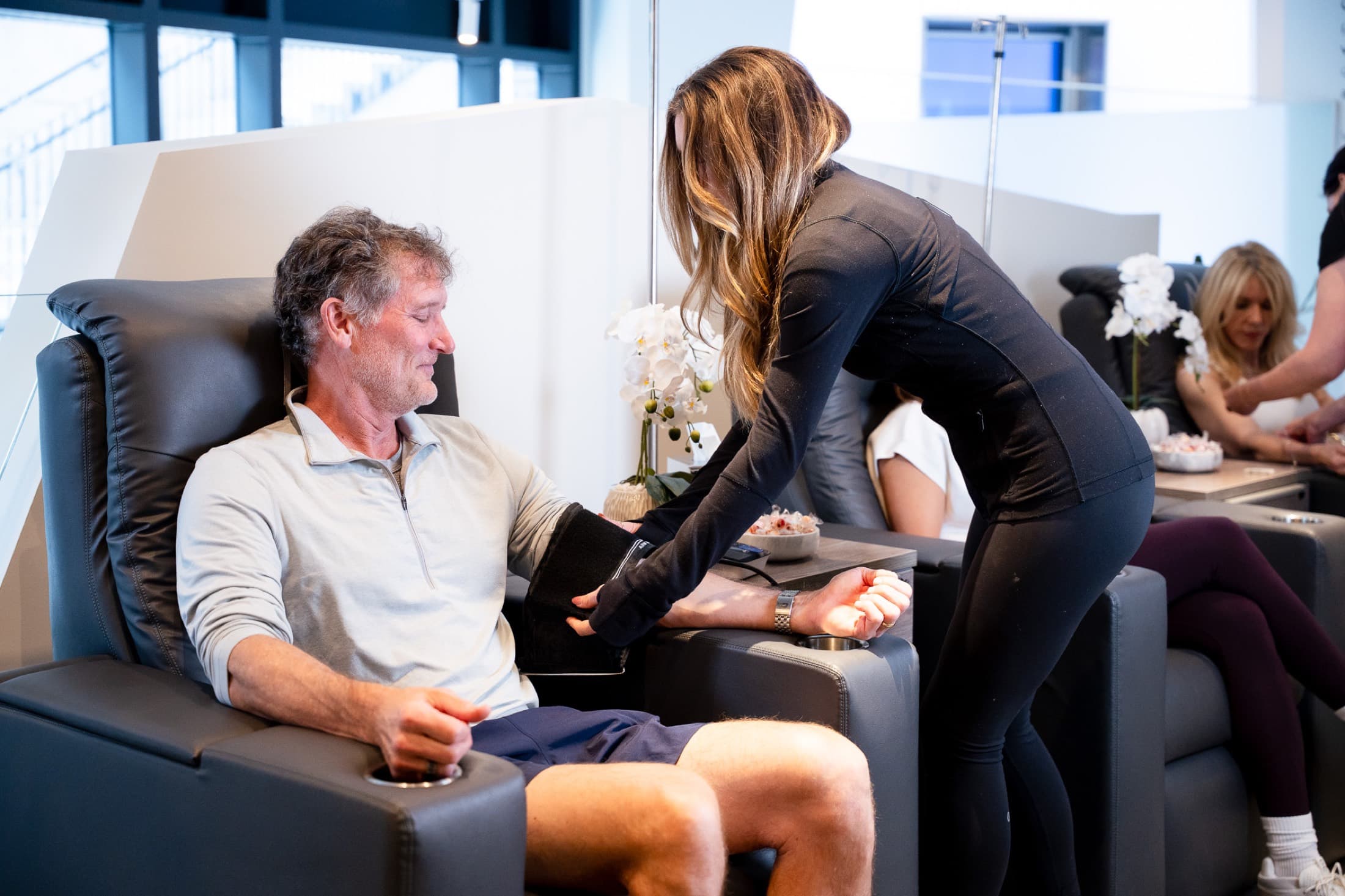
The Quiet Work of Pressure: What Compression Teaches Us About How the Body Heals Itself
Compression therapy isn't simply about sore muscles. It's a conversation with the body's own fluid intelligence — one that reveals how recovery is actively constructed, not passively awaited.
There is a version of recovery that most people are familiar with — the kind that involves rest, sleep, perhaps a deliberate lack of activity. Lie still long enough, the thinking goes, and the body will sort itself out. This is not wrong, exactly. But it is incomplete. Because beneath the surface of a body at rest, recovery is not passive. It is organized, chemical, and surprisingly dependent on movement — even when that movement is borrowed from outside.
Compression therapy is, at its core, an attempt to work with that organization rather than simply wait for it.
What the Body Is Actually Trying to Do
After intense physical effort, the tissue holds more than fatigue. There is fluid that has shifted out of the capillary beds and into the interstitial space — a normal consequence of the circulatory demands of exercise, but one that the body must now actively process. There is metabolic debris: the byproducts of muscular contraction that accumulate faster than local circulation can clear them. And there is a mild inflammatory signal, which is purposeful and necessary but which, if it lingers too long or accumulates too often, begins to work against the very adaptation it was meant to initiate.
The lymphatic system is the body's primary infrastructure for managing this cleanup. Unlike the cardiovascular system, which has the heart as its pressure source, the lymphatic network has no dedicated pump. It moves fluid through a combination of muscular contraction, respiratory pressure changes, and the subtle mechanical forces of daily movement. When those forces are reduced — as they often are during deliberate rest — lymphatic transit slows accordingly.
"The lymphatic system was designed to be used. Compression, in a sense, reminds it of what movement it has temporarily lost."
Sequential pneumatic compression devices work by mimicking and amplifying exactly this mechanism. Chambers inflate and deflate in a graduated, proximal-to-distal sequence — or distal-to-proximal, depending on the application — producing a rhythmic mechanical pressure that moves fluid through the limb in a way that mirrors, and in some contexts exceeds, what voluntary movement would accomplish. Research suggests this approach can meaningfully accelerate the clearance of interstitial fluid and may support the removal of metabolic waste products from fatigued tissue, particularly in the lower extremities where lymphatic return is already working against gravity.
Pressure as a Biological Conversation
What makes compression interesting beyond its mechanical effects is the way it appears to communicate with the tissue itself. Sustained, rhythmic pressure influences more than fluid movement. It engages mechanoreceptors — sensory structures embedded in the skin and fascia that respond to physical deformation and translate it into cellular signals. These signals appear to influence local circulation, affect the tone of the smooth muscle lining blood vessels, and may play a role in modulating the inflammatory environment at the tissue level.
This is why the experience of compression often feels less like treatment and more like recovery accelerated. The heaviness in the legs that follows long runs or extended travel tends to dissipate noticeably during a session. The tissue that felt dense and reluctant begins to feel, for lack of a more clinical word, lighter.
The implications extend beyond athletic recovery. Individuals who spend long hours seated — in flights, at desks, in surgical suites — experience a gradual stagnation of venous and lymphatic return that compression is particularly well suited to address. The physiology is the same regardless of how the fluid accumulation occurred; the mechanical solution applies equally.
It is worth noting that compression's role in recovery exists within a broader ecosystem of tools. Peptides, for instance, operate on a different layer of the same conversation — working through molecular signaling to influence tissue repair and regeneration from the inside out. A recent review of peptides in regenerative contexts found associations with meaningful improvements in tissue repair outcomes across a range of clinical applications (Luansritisakul et al., 2026). The mechanisms are distinct from compression, but the underlying logic rhymes: the body has its own repair intelligence, and many of the most effective recovery strategies are those that learn to speak its language.
Why This Matters Beyond the Training Room
The conversation around compression has expanded considerably in recent years, partly because the population using it has. What began as a tool primarily associated with clinical lymphedema management and elite athletic performance has become a broader recovery modality — and for good reason. The underlying physiology is not specific to athletes. Anyone whose body is managing physical demand, navigating the systemic inflammation associated with aging, or simply trying to sustain performance across decades has a stake in how efficiently their tissue recovers between efforts.
There is also a temporal argument to be made. Recovery does not accumulate in a single session; it compounds across many. A body that consistently clears metabolic byproducts more efficiently, that returns to baseline faster, that spends less time in the liminal space between effort and adaptation — that body has more available capacity, session after session, year after year. The gains are incremental and quiet, which may be why they are easy to underestimate.
What compression ultimately asks us to consider is that healing is not simply something the body does when left alone. It is a process that can be supported, accelerated, and in some cases genuinely optimized — not by overriding the body's own intelligence, but by giving it better conditions in which to express what it already knows how to do. That reframing, modest as it sounds, changes how you think about the hours between the work. They are not empty. They are, if anything, the most consequential hours of all.