The Language of Pressure: How Compression Speaks to the Body
Compression isn't just about squeezing tired muscles — it's a conversation with the circulatory and lymphatic systems, written in the language of pressure and time.
There is something quietly remarkable about the fact that the body has its own return system. Blood travels out through arteries with the full authority of the heart behind it, but the journey back — through veins and the slower, more delicate network of lymphatic vessels — relies on something far more passive: muscle contraction, gravity, breath, and movement. It is an elegant design, and like many elegant designs, it has its vulnerabilities.
Compression therapy, in its modern forms, is essentially an attempt to assist that return system. To speak to it in a language it already understands — pressure — and to do so in a deliberate, calibrated way. Understanding why that matters requires a short detour through physiology.
The Circulatory Return Problem
After intense physical output, the tissues in working muscles accumulate metabolic byproducts: lactate, hydrogen ions, inflammatory mediators. The circulatory system's job is to clear these — to flush the tissue bed and restore the conditions necessary for repair and adaptation. But that process depends on blood and lymph moving efficiently back toward the core.
When someone is sedentary post-exercise, or simply fatigued, that return is sluggish. Fluid can pool in the lower extremities. Lymphatic flow, which has no dedicated pump the way venous blood has the heart, relies almost entirely on movement and external pressure to keep things circulating. This is one reason that sitting still after a hard effort often feels worse than a gentle walk — the body is designed to move fluid through motion.
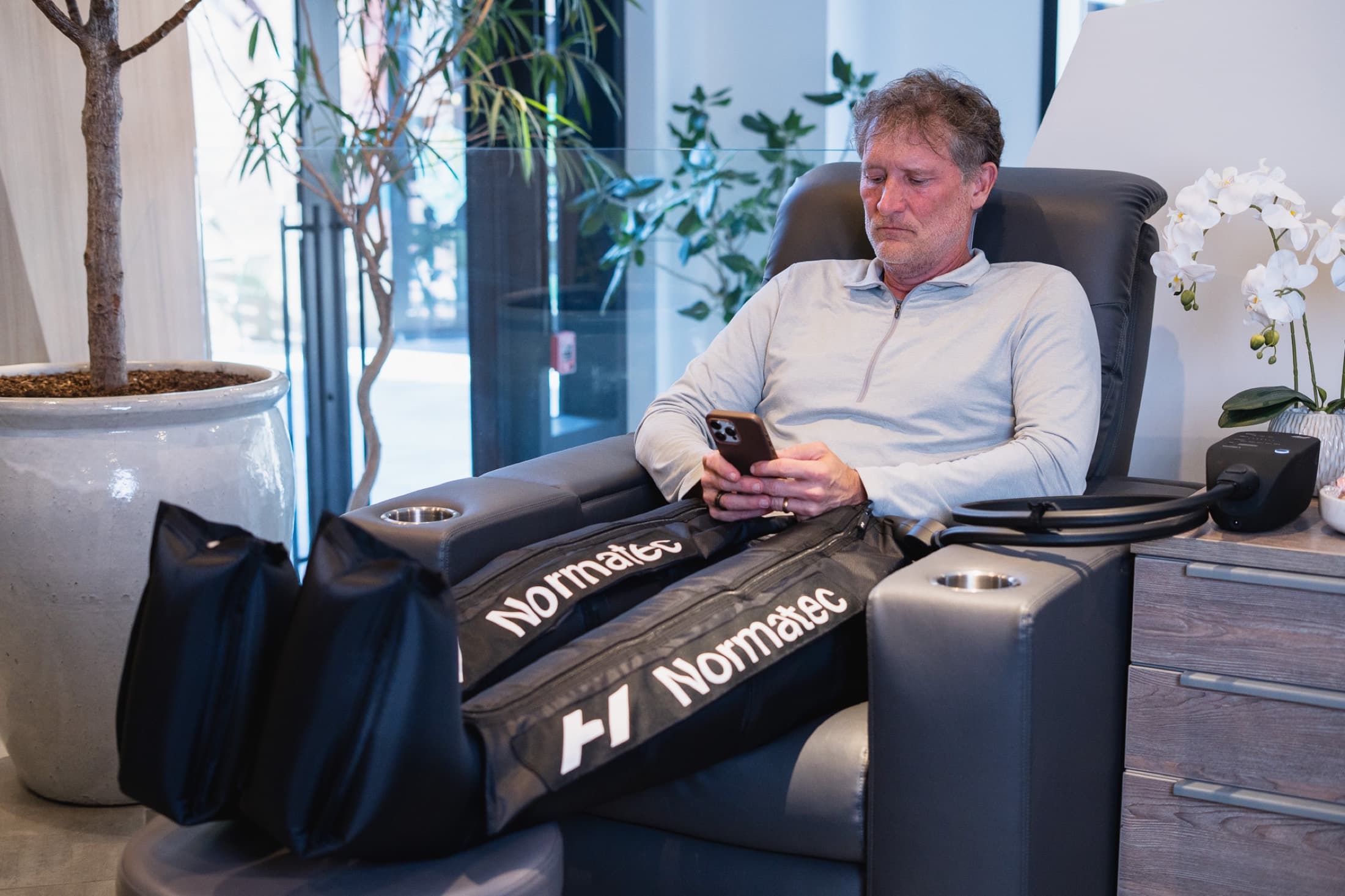
Graduated compression — whether from fitted garments or pneumatic devices that inflate sequentially from the foot upward — mimics and augments this process. Research suggests that dynamic pneumatic compression in particular may accelerate venous return, reduce markers of delayed-onset muscle soreness, and support lymphatic clearance in ways that passive rest alone does not.
"The lymphatic system is often described as the body's drain. Compression, in some sense, is simply helping it do what gravity and stillness cannot."
What the Evidence Actually Says
It is worth being precise here, because the compression space contains both solid science and considerable noise. The strongest evidence tends to cluster around a few consistent findings:
- Perceived recovery improves meaningfully with compression in the hours following strenuous exercise, across a range of athlete populations.
- Swelling and limb circumference — common measures of fluid accumulation — appear to be reduced with consistent compression use post-exertion.
- Performance in subsequent training sessions may benefit, though the effect size varies and likely depends on intensity, modality, and timing.
What compression does not appear to do, at least based on current evidence, is dramatically accelerate the biological repair process itself. It seems to create better conditions for recovery — reduced swelling, improved circulation, less soreness — rather than directly speeding cellular regeneration. That distinction matters, because it reframes compression as a facilitator rather than a shortcut.
There is also meaningful variation between passive compression garments and active pneumatic systems. Garments provide constant graduated pressure and are well-studied for their role in managing chronic venous insufficiency and reducing exercise-induced muscle damage. Pneumatic systems, which cycle through inflation sequences, offer a more dynamic stimulus — closer to the rhythmic contraction of muscles in motion — and are increasingly used by endurance athletes and sports medicine practitioners for post-competition recovery.
Timing, Consistency, and the Bigger Picture
Like most recovery interventions, compression appears to work best as part of a broader strategy rather than a stand-alone solution. Timing matters: the window immediately following intense exercise, when tissue inflammation is peaking and fluid accumulation is beginning, is generally considered the most productive time to apply compression. Consistency matters too — occasional use produces more modest effects than regular integration into a recovery routine.
There is something philosophically interesting about what compression asks of the body. It does not override the recovery process or substitute for it. It simply creates conditions that make the body's own systems more effective — clearing the path, reducing resistance, giving the return journey a little more assistance than it would otherwise have.
In a culture that tends to fetishize intensity, there is something worth sitting with in that idea: that some of the most meaningful performance work happens not during the effort, but in the quiet, deliberate hours that follow it — when the body is doing its most important work, and the wisest thing we can do is get out of its way, or gently help it along.