The Accumulated Debt: What the Body Quietly Negotiates Between Sessions
Recovery isn't a passive pause between efforts — it's a structured biological negotiation, and compression may be one of the clearest languages the body already speaks.
There is a version of the performance story that ends at the gym, the track, or the finish line. The effort is logged, the session complete, and attention moves on. But the more interesting chapter — biologically speaking — begins precisely at the moment the effort stops. What the body does in the hours that follow is less visible and far more consequential than most performance culture acknowledges.
Recovery, in the physiological sense, is not the same as stillness. It is a coordinated cascade: inflammatory signals rise and then resolve, damaged tissue is cleared, protein synthesis accelerates, and the adaptive machinery of the body attempts to rebuild slightly stronger than before. The challenge is that this cascade is governed by real constraints — circulatory efficiency, lymphatic clearance, the availability of repair signals — and modern training loads often outpace the body's ability to meet them on its own timeline.
This is where compression enters the conversation, not as a comfort measure, but as a physiological prompt.
What Pressure Actually Does to the Tissue
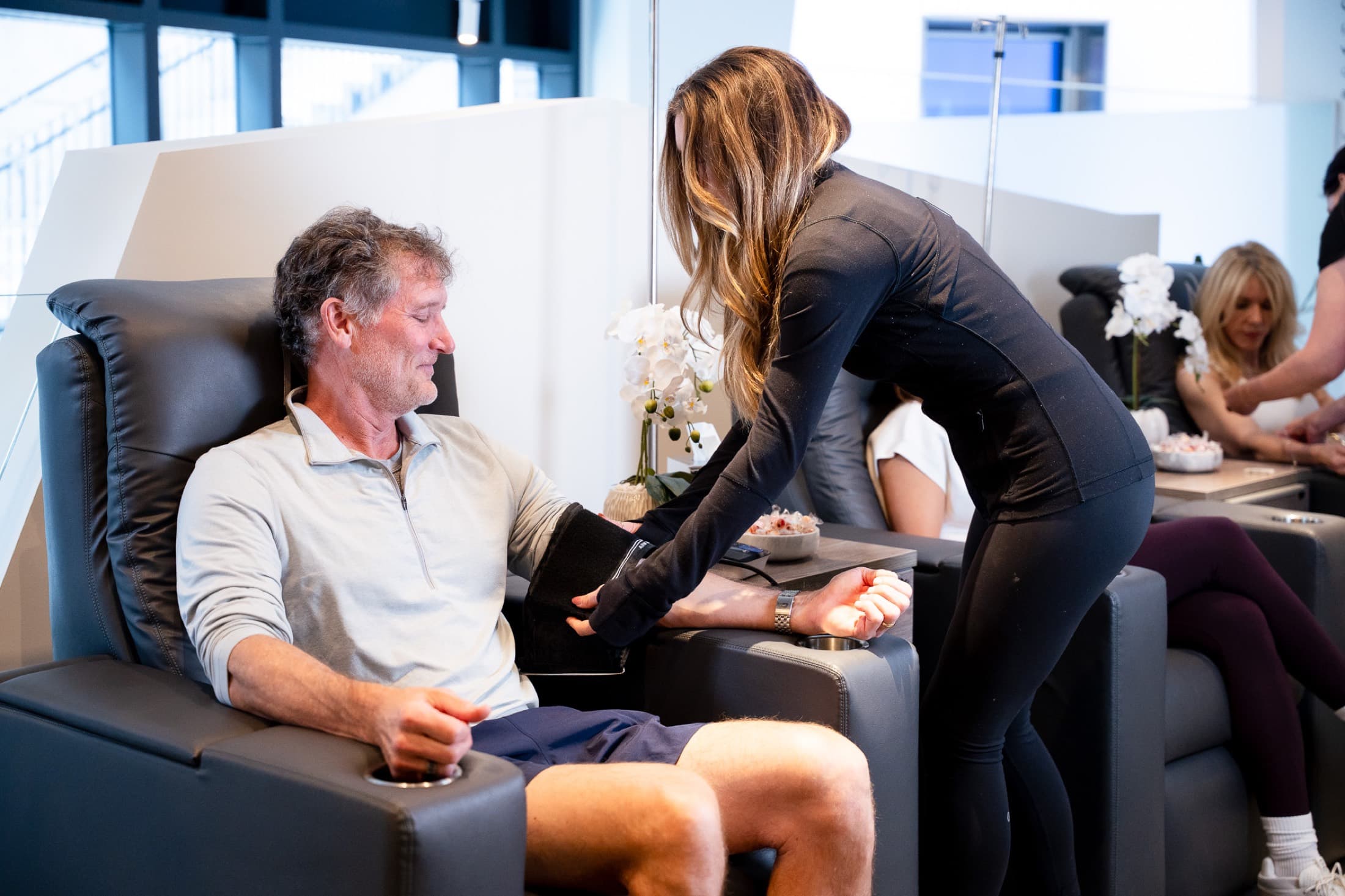
Compression therapy — whether through graduated garments or sequentially inflating pneumatic sleeves — works by applying mechanical pressure to the limbs or torso in a way that mimics and augments the body's own lymphatic and venous return. The lymphatic system, unlike the cardiovascular system, has no dedicated pump. It relies on muscle contraction, breathing, and movement to push fluid through its network of vessels. When training volume is high or recovery time is compressed, this system can fall behind, leaving metabolic byproducts, excess interstitial fluid, and inflammatory mediators pooled in the tissue.
External compression provides what the resting body struggles to generate on its own: a directed, graduated mechanical force that encourages fluid to move proximally — from the extremities back toward central circulation, where it can be filtered and cleared. Research suggests this mechanism is associated with reductions in perceived muscle soreness, accelerated return of limb volume to baseline, and improvements in markers of localized inflammation in the hours following intense exercise.
The body does not distinguish between the effort you gave and the recovery you allowed — it only works with what it receives.
But the mechanism is more nuanced than simple fluid movement. Compression appears to influence the afferent nervous system as well — the sensory signals traveling from the tissue to the brain. There is evidence that structured pressure modulates pain signaling and may reduce the central perception of post-exercise fatigue, independent of any purely mechanical effect. The sensation of being compressed, it turns out, is itself a biological input.
The Intersection With Repair Signaling
Recovery is never purely mechanical. Alongside the hydraulic work of moving fluid, the body is simultaneously coordinating a molecular conversation — growth factors, inflammatory cytokines, and signaling peptides directing the repair of stressed tissue. This is where the science of recovery becomes genuinely interesting, and where different modalities begin to speak to each other.
Peptides like BPC-157 and TB-500 have attracted significant research attention for their apparent roles in tissue repair. A recent histopathological and biomechanical study found that both peptides were associated with measurable improvements in tendon healing outcomes in animal models (Biçer et al., 2026), consistent with a growing literature suggesting that the body's own molecular signaling — when supported rather than bypassed — may accelerate the resolution of exercise-induced damage.
What emerges from this research is a picture of recovery as layered: there is the mechanical layer (fluid clearance, tissue perfusion, swelling resolution) and the molecular layer (repair signaling, cellular reconstruction, adaptive remodeling). Compression addresses the first layer directly. Other interventions — peptide protocols, targeted nutrition, sleep architecture — address the second. The most effective recovery strategies tend to work across both simultaneously rather than treating them as separate problems.
This also helps explain why elite-performing individuals who train at high volumes appear to benefit most from structured recovery protocols. It is not that their bodies are fundamentally different. It is that the accumulated training debt they carry is large enough that passive rest alone cannot clear it on the timeline their schedules demand. The biology has not changed; only the load has.
The Longer Frame
There is a tendency to think about compression and recovery as in-season tools — things you reach for when soreness is acute or competition is close. But the more instructive frame is longitudinal. Chronic low-grade inflammation, inadequate lymphatic clearance, and incomplete tissue repair between sessions are not just performance limiters in the short term. Over years, they contribute to the kind of structural wear that accelerates functional decline.
The athlete who recovers well between sessions:
- Returns to training with lower residual inflammation
- Accumulates less structural microtrauma over time
- Maintains training quality and consistency across longer periods
- Preserves the joint and tissue integrity that defines performance longevity
None of this is complicated in concept. It is complicated in practice because recovery requires the same intentionality that training does — the same scheduled time, the same deliberate attention. What compression therapy offers, among other things, is a structured reason to pause. To sit with the work already done and give the body what it needs to convert that work into adaptation.
Performance, viewed at the right timescale, is less about what you can extract from a single session and more about what you can sustain across a decade. The body is remarkably willing to keep meeting the demands placed on it. The question is whether you are giving it enough of what it needs to do that faithfully, session after session, year after year.