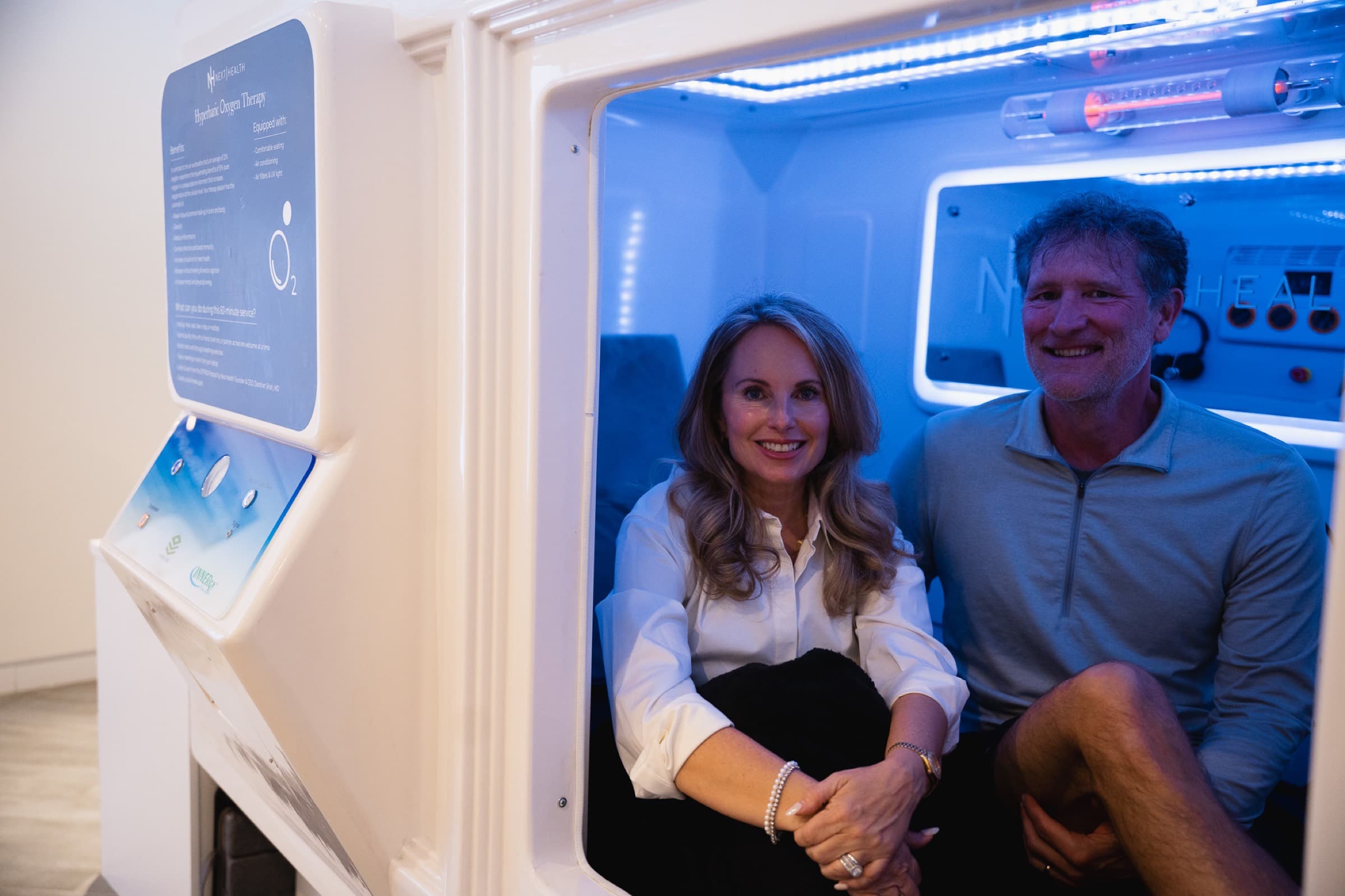
Infrared sauna warms the body directly to raise core temperature, placing a gentle, exercise-like load on the heart and blood vessels.
There is something almost suspicious about the sauna as a health practice. It asks for no exertion, no discipline, no discomfort beyond pleasant warmth. You sit. You breathe. You feel, frankly, wonderful.
And yet deliberate heat exposure is among the most consistently studied practices in longevity research. The body, it turns out, takes warmth very seriously — and treats it as one of the oldest adaptive challenges it knows.
What heat asks of the body
When you sit in genuine heat, your body cannot ignore it. Core temperature begins to rise, and a coordinated response kicks in to manage it.
The heart rate climbs. Blood vessels dilate. Circulation increases and redistributes toward the skin to shed warmth. You begin to sweat. If you have ever noticed that a sauna session leaves you feeling pleasantly worked, that instinct is correct: your cardiovascular system has, in fact, been doing real work the entire time.
This is the quiet reason heat is so interesting. It produces a mild cardiovascular load that resembles, in some respects, the load of light exercise — without the mechanical wear, and accessible to almost anyone.
The sauna is one of the few places where doing nothing places a genuine, beneficial demand on the body.
A controlled stress, again
Heat belongs to the same family as cold: it is a hormetic stress. A brief, manageable challenge that prompts the body to adapt and strengthen.
The cellular response to heat is its own small drama. Cells produce what are aptly named heat shock proteins — molecules that help maintain and repair other proteins, and that are part of how cells cope with stress in general. Practicing the heat response appears to keep this protective machinery in good working order.
The broad pattern across long-term research is encouraging. Regular sauna use has been associated, in large population studies, with favorable cardiovascular outcomes and a general signal toward longevity. Researchers are careful — association is not proof of cause — but the consistency of the signal is hard to dismiss.
The infrared difference
A traditional sauna heats the air, and the hot air heats you. It can be intense, and for some people genuinely uncomfortable.
Infrared sauna takes a gentler route. It uses infrared light to warm the body directly, raising core temperature deeply but at a more moderate air temperature. The physiological goal is the same — a meaningful rise in core heat — but the experience is calmer and, for many people, far more sustainable as a regular habit.
That sustainability matters. The benefits of heat, like the benefits of nearly everything in longevity, come from repetition. A practice you can comfortably return to several times a week will always outperform an intense one you avoid.
The pleasure is not a problem
We carry a stubborn assumption that anything good for us must be unpleasant — that benefit and discomfort are linked. Heat therapy is a useful correction to that belief.
Here is a practice that is deeply restorative, supported by a substantial body of research, and genuinely enjoyable. The relaxation is not a distraction from the benefit. The lowered stress, the quiet, the screen-free stillness — these are part of the benefit.
Sometimes the most sophisticated thing you can do for your long-term health is also the simplest: sit in the warmth, let the body do its oldest work, and allow yourself to feel good while it happens.