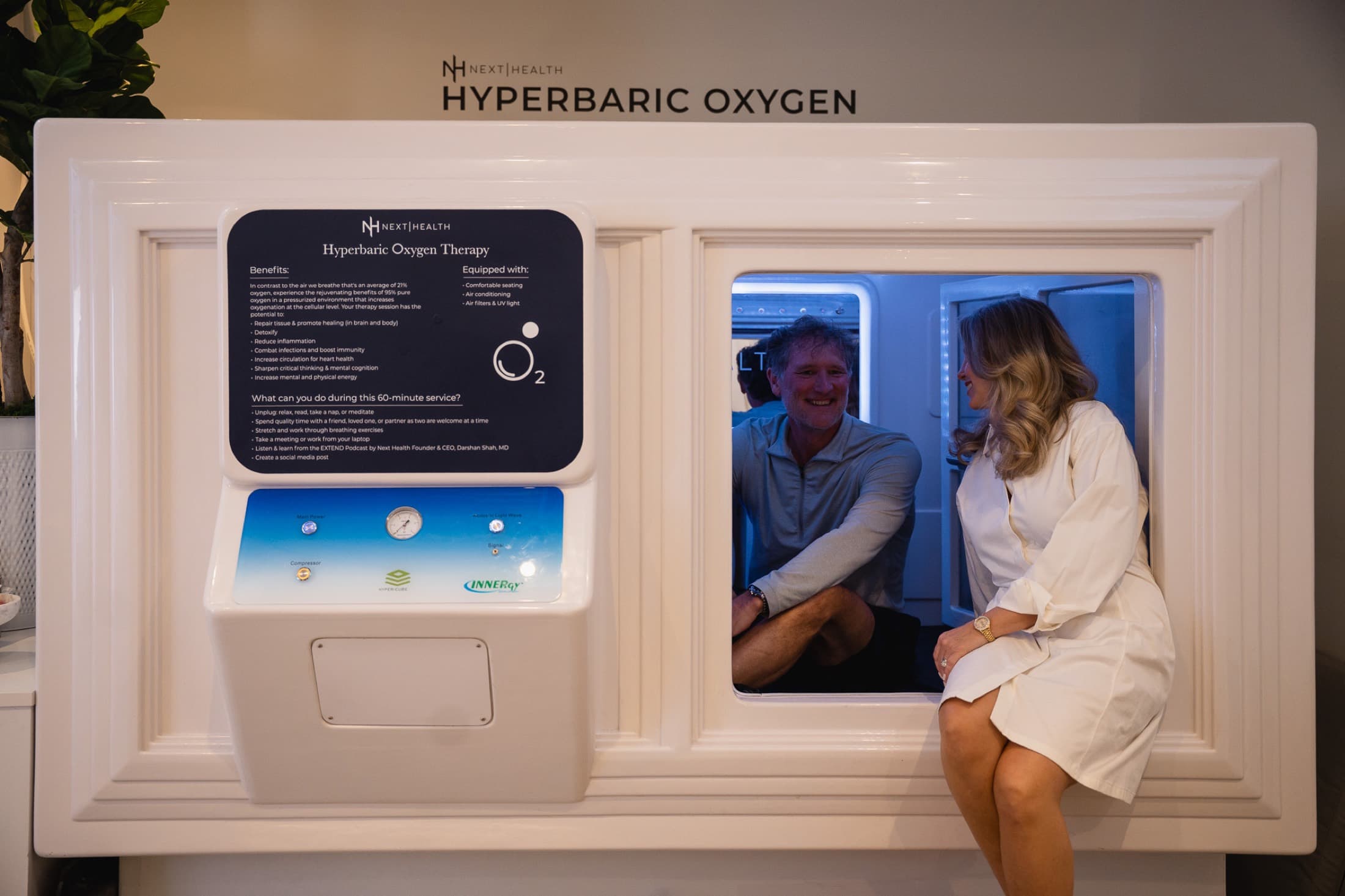
The Dissolved Difference: What Pressure Does to Oxygen in the Body
Hyperbaric oxygen therapy works not by adding more oxygen to the blood, but by changing its physics entirely — and that distinction opens a surprising window into recovery and repair.
There is a version of this story most people already know, at least loosely. You breathe oxygen. Your hemoglobin carries it. Your cells use it. Simple enough — until you start asking what happens when the delivery system breaks down, or when a tissue has spent years receiving less oxygen than it needs, or when the body's repair mechanisms have quietly downshifted because the raw materials for rebuilding are perpetually short-supplied.
At that point, the simple story gets complicated in interesting ways. And hyperbaric oxygen therapy is, at its core, a story about changing the physics of how oxygen moves through the body — not just the quantity delivered, but the fundamental mechanism of delivery.
A Physics Lesson the Body Never Forgot
Under ordinary conditions, your blood carries oxygen almost entirely through a single pathway: hemoglobin. The protein in your red blood cells binds to oxygen in the lungs, ferries it through the circulatory system, and releases it at the tissue level. It is an elegant, efficient system — so efficient, in fact, that hemoglobin is nearly saturated at normal atmospheric pressure. There is very little room left to push more oxygen through the same channel.
But there is a second pathway, one that operates under different rules entirely. Henry's Law — a principle of physics, not biology — states that gases dissolve into liquids in direct proportion to the pressure applied to them. In a hyperbaric chamber, where the atmospheric pressure rises to one and a half to three times normal levels and the patient breathes pure medical-grade oxygen, something consequential happens: oxygen begins dissolving directly into the blood plasma, the cerebrospinal fluid, the lymph, the synovial fluid of the joints. It moves through the body by diffusion rather than by hemoglobin transport, reaching tissues through fluid rather than vessels.
This is not a subtle distinction. Tissues that receive compromised circulation — damaged areas, inflamed joints, regions of the brain affected by years of imperfect blood flow — can still be reached by dissolved oxygen traveling through fluid gradients. The delivery infrastructure becomes, in a meaningful sense, less relevant. Plasma oxygen concentrations under hyperbaric conditions can reach ten to fifteen times what is achievable breathing normal air at sea level.
What Happens at the Cellular Level
The physiological response to this oxygen abundance unfolds in layers, and researchers are still tracing the full complexity of the signaling cascade it sets off.
The most immediate effect is mitochondrial. Cells that have been operating in a state of chronic oxygen deficit — running, metabolically speaking, on reduced capacity — encounter a sudden abundance of the resource they use to produce ATP, the body's primary energy currency. Mitochondrial efficiency improves. Protein synthesis and cellular repair processes that had been operating below their potential begin to normalize.
Beyond the energy story, there are regulatory effects that appear to persist well after the session ends. Hyperbaric oxygen modulates HIF-1α, a master protein that governs how cells respond to oxygen availability — essentially resetting cells from a chronic survival mode back toward regenerative function. It also appears to suppress NF-κB, one of the central drivers of the inflammatory signaling cascade, producing anti-inflammatory effects that extend beyond the chamber itself.
Then there is the stem cell response. Research suggests that repeated hyperbaric sessions are associated with measurable mobilization of stem cells from bone marrow — a finding that has intrigued researchers studying tissue repair and the biology of recovery.
"The question isn't whether oxygen is important to healing. The question is whether the tissues that need it most are actually receiving it."
What makes recent research particularly interesting is that the applications are broadening in unexpected directions. A 2026 prospective cohort study by Kim et al. found that hyperbaric oxygen therapy improved clinical symptoms and functional capacity in patients with ME/CFS — a condition characterized by profound fatigue and post-exertional malaise — and was associated with measurable changes in thalamic connectivity. The thalamus, a central hub for sensory and motor signal integration, is not where most people expect a pressurized oxygen session to make a visible difference. But it points toward something the field is gradually accepting: that the downstream effects of plasma-dissolved oxygen reach further into the body's regulatory systems than the simple oxygenation story would suggest.
The Recovery Angle Worth Understanding
For those approaching HBOT from a performance and longevity standpoint — rather than a clinical or wound-care context — the most relevant question is probably this: what does it mean to give the body a concentrated window of repair-grade oxygen on a recurring basis?
The honest answer is that the research is still accumulating, and measured enthusiasm is the appropriate posture. What does appear consistent across studies is a cluster of effects worth taking seriously:
- Reduced markers of systemic inflammation following repeated sessions
- Improved mitochondrial function in tissues experiencing chronic low-grade oxygen deficit
- Accelerated recovery from soft tissue and musculoskeletal stress
- Neurological effects, including reported improvements in cognitive clarity and sleep quality
- Stem cell mobilization associated with multi-session protocols
None of this is magic, and none of it bypasses the fundamentals — sleep, nutrition, movement, stress regulation. But it fits within a coherent framework: if the body's repair systems are constrained by oxygen availability in compromised tissues, and if hyperbaric conditions can dissolve oxygen into those tissues through a physics-based mechanism that bypasses the usual circulation limits, then the chamber is doing something structurally logical, not merely speculative.
What stays with me about hyperbaric oxygen therapy is how old the underlying principle is — Henry's Law has been on the books since 1803 — and how long it took medicine to think seriously about applying it to recovery and longevity rather than just emergency decompression sickness. Sometimes the most useful tools are the ones whose physics we understood long before we understood ourselves well enough to use them wisely. The body has always known how to repair. The work is in giving it the conditions to do so.