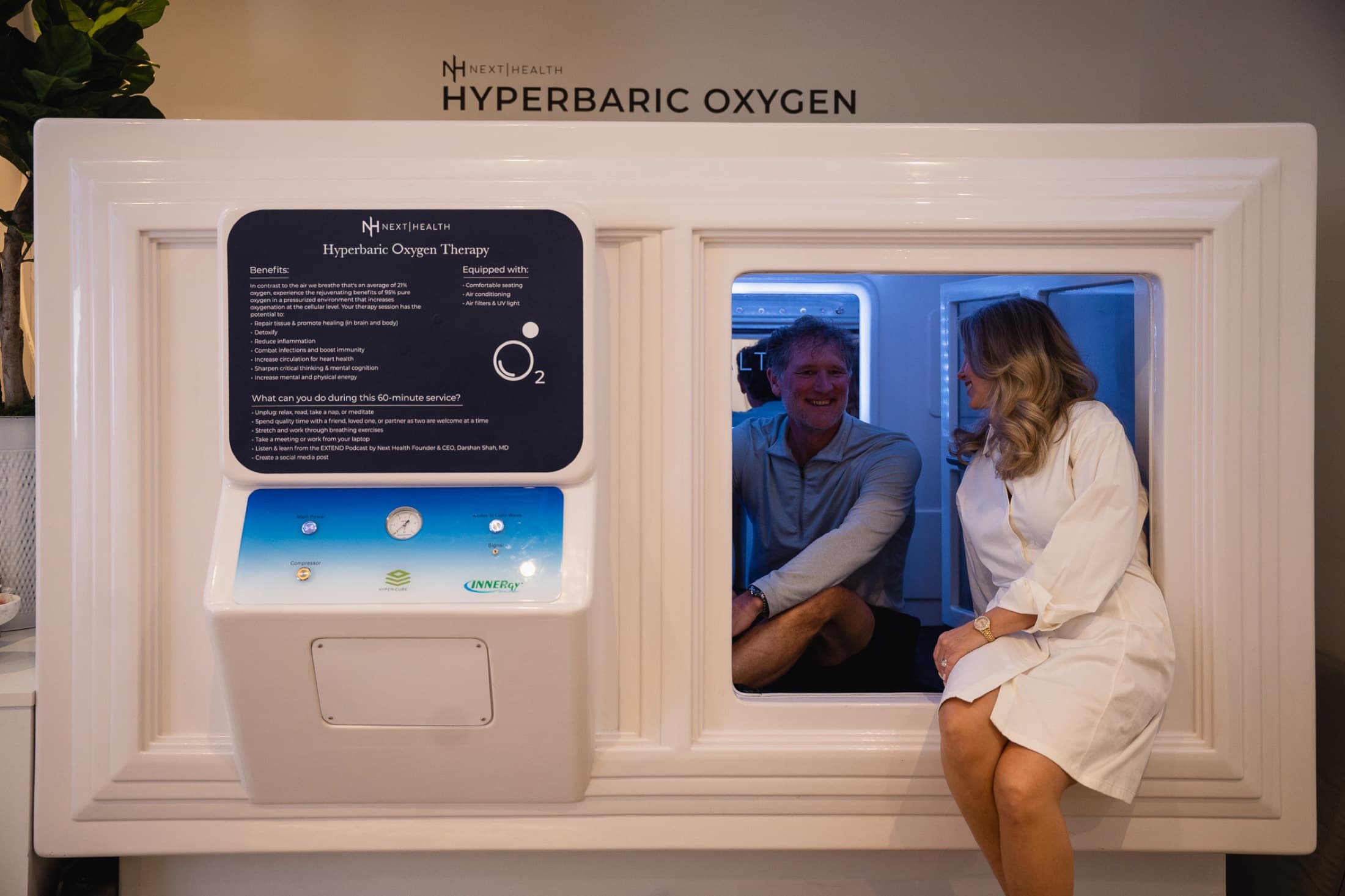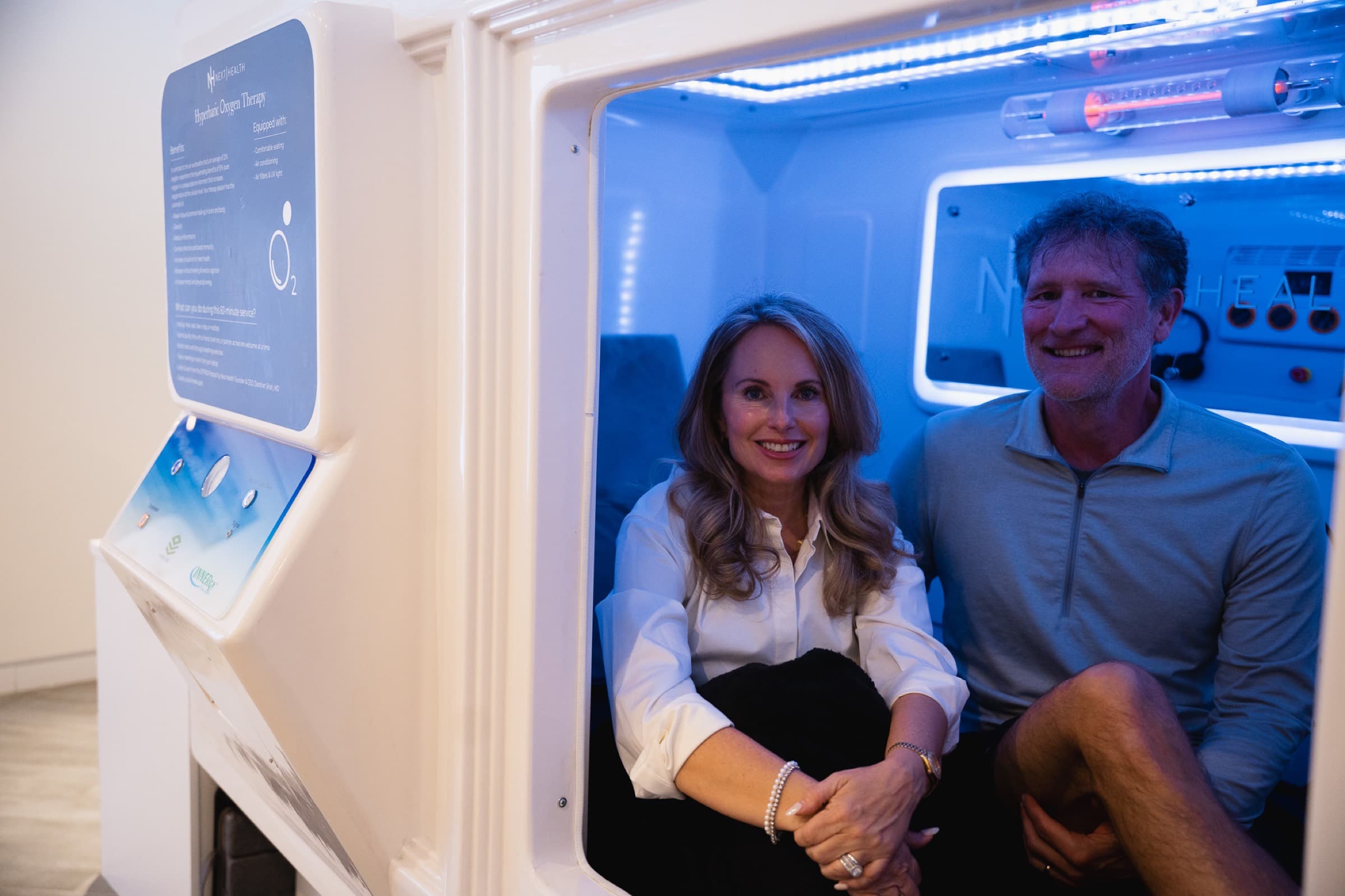
Hyperbaric oxygen therapy delivers oxygen under pressure to speed cellular repair and reach tissue that normal circulation underserves.
There is something almost counterintuitive about the idea that healing requires stillness. We tend to think of recovery as active — movement, stretching, hydration, sleep routines. But some of the most meaningful repair the body undergoes happens at a level invisible to effort: inside the cell, in the tissue, along the slow architecture of the vascular system. Hyperbaric oxygen therapy works precisely there, in that quiet interior, and understanding how it works changes how you think about recovery altogether.
What Actually Happens in the Chamber
At normal atmospheric pressure, oxygen is carried through the body almost entirely by hemoglobin — the protein in red blood cells that acts as the transport vehicle. It's an efficient system, and under ordinary circumstances, it's sufficient. But hyperbaric oxygen therapy introduces a different condition: a pressurized environment, typically between 1.5 and 3 atmospheres, in which pure or high-concentration oxygen is breathed continuously for 60 to 90 minutes.
Under that pressure, oxygen behaves differently. It dissolves directly into the blood plasma, the cerebrospinal fluid, and the lymphatic fluid — reaching tissues that red blood cells struggle to access, particularly in areas of inflammation, injury, or compromised circulation. This is the mechanism that makes the therapy genuinely interesting from a physiological standpoint. It isn't adding more of what the body already has. It's changing the delivery system entirely.
Research suggests this elevated oxygen saturation triggers several downstream effects: stimulation of angiogenesis (the growth of new blood vessels), modulation of inflammatory markers, and what some studies describe as upregulation of the body's endogenous antioxidant response. There is also emerging evidence around its effects on mitochondrial function — a fitting thread, given how central mitochondria are to nearly every conversation about longevity and cellular health.
"The body does not heal in straight lines. It heals in layers, over time, with the right inputs."
The Recovery Case — and Beyond It
For athletes and high performers, the appeal is straightforward. Physical training is, by design, a controlled form of stress — you break tissue down to force adaptation. Recovery is where the adaptation actually happens, and anything that accelerates or deepens that repair process is worth understanding. Some research has associated hyperbaric oxygen sessions with reduced muscle soreness, faster clearance of metabolic byproducts, and shorter return-to-performance timelines after acute injury.
But the conversation extends well past sport. In clinical settings, hyperbaric therapy has a long and documented history — it has been used for decades in the treatment of decompression sickness, carbon monoxide poisoning, non-healing diabetic wounds, and radiation-damaged tissue. These applications aren't fringe; they're FDA-cleared, with substantial research foundations. The wellness application represents a quieter, more speculative frontier — one where the evidence is still maturing but the underlying physiology is coherent enough to take seriously.
What makes the longevity angle particularly compelling is the relationship between oxygen delivery and aging tissue. As we age, microcirculation tends to decline — small vessels become less efficient, oxygen delivery to peripheral tissue decreases, and the cellular repair cycle slows. Some researchers are investigating whether repeated hyperbaric exposure may support improved perfusion in aging tissue, with preliminary studies exploring associations with telomere length and senescent cell burden. These findings are early. But they point in a direction that aligns with what we already understand about cellular aging: that the environment inside the cell — including its oxygen economy — matters enormously.
A Practice of Accumulation
One session of hyperbaric oxygen therapy is unlikely to change much. The more meaningful application appears to be repeated exposure over weeks — a protocol, not a single intervention. This is consistent with how most evidence-informed longevity practices work. The body responds to signals delivered consistently over time, not to single dramatic inputs. Sleep quality, light exposure, thermal stress, nutritional sufficiency — all of these work through accumulation and rhythm.
What hyperbaric therapy offers, at its best, is a way to provide the body with an extraordinary input under controlled conditions: more oxygen than it could ever access at sea level, delivered in a way that reaches the tissues that need it most. Whether that feels like recovery, repair, or something closer to maintenance depends on the person and the context. But the underlying principle is the same one that runs through most of what makes longevity science interesting — that the body is capable of remarkable things when the conditions are right.