The longest-lived people don't buy their health in a single transaction. They earn it in small, repeated decisions — and the first of those decisions is to measure.
There is a quiet myth at the center of modern wellness — the idea that vitality is something you acquire. A supplement, a device, a membership, a single dramatic intervention. Buy the right thing, the thinking goes, and health follows.
It is an appealing story. It is also the wrong one.
The people who reach their eighties and nineties with energy intact rarely have a purchase to point to. What they have instead is a pattern: a long series of unremarkable decisions, made consistently, that compounded. Longevity, it turns out, behaves far more like a practice than a product.
The compounding nobody photographs
We are comfortable with the idea of compounding when it involves money. We understand that small, regular contributions, left alone for decades, become something disproportionate to their inputs.
Health works the same way — we are simply less patient with it.
A slightly better night of sleep does not announce itself. A single balanced meal changes nothing you can feel. One session of deliberate recovery will not visibly alter your life. And so we discount these things, because their returns are invisible on any given Tuesday.
But the body keeps the ledger. Ten years of marginally better sleep is not a footnote — it is a different brain, a different metabolism, a different cardiovascular trajectory. The returns are real. They are simply paid out slowly, and quietly, and all at once near the end.
The interventions that matter most are the ones too small to feel working.
Why measurement comes first
If longevity is a practice, then like any practice it needs feedback. You cannot refine what you cannot see.
This is where most well-intentioned health journeys stall. People resolve to "be healthier" and then operate blind — guessing at their nutrition, estimating their recovery, assuming their bloodwork is fine because nothing hurts yet. Absence of symptoms becomes a stand-in for presence of health, and the two are not the same thing.
A comprehensive look at your biomarkers changes that. Not as a one-time verdict, but as a baseline — a fixed point you can measure against. It turns vague intention into specific direction. Instead of "eat better," you get "your inflammatory markers are elevated, and here is what tends to move them." Instead of "feel more energy," you get a metabolic picture clear enough to act on.
The number itself is not the point. The point is that a measured starting line makes every decision afterward an experiment with an answer, rather than a hope.
The practice, defined
So what does the practice actually consist of? Less than you might fear.
- Knowing your baseline. A real one, drawn from data, revisited regularly.
- Protecting sleep as if it were a medical intervention — because it is.
- Moving daily, in ways you will still be doing in twenty years.
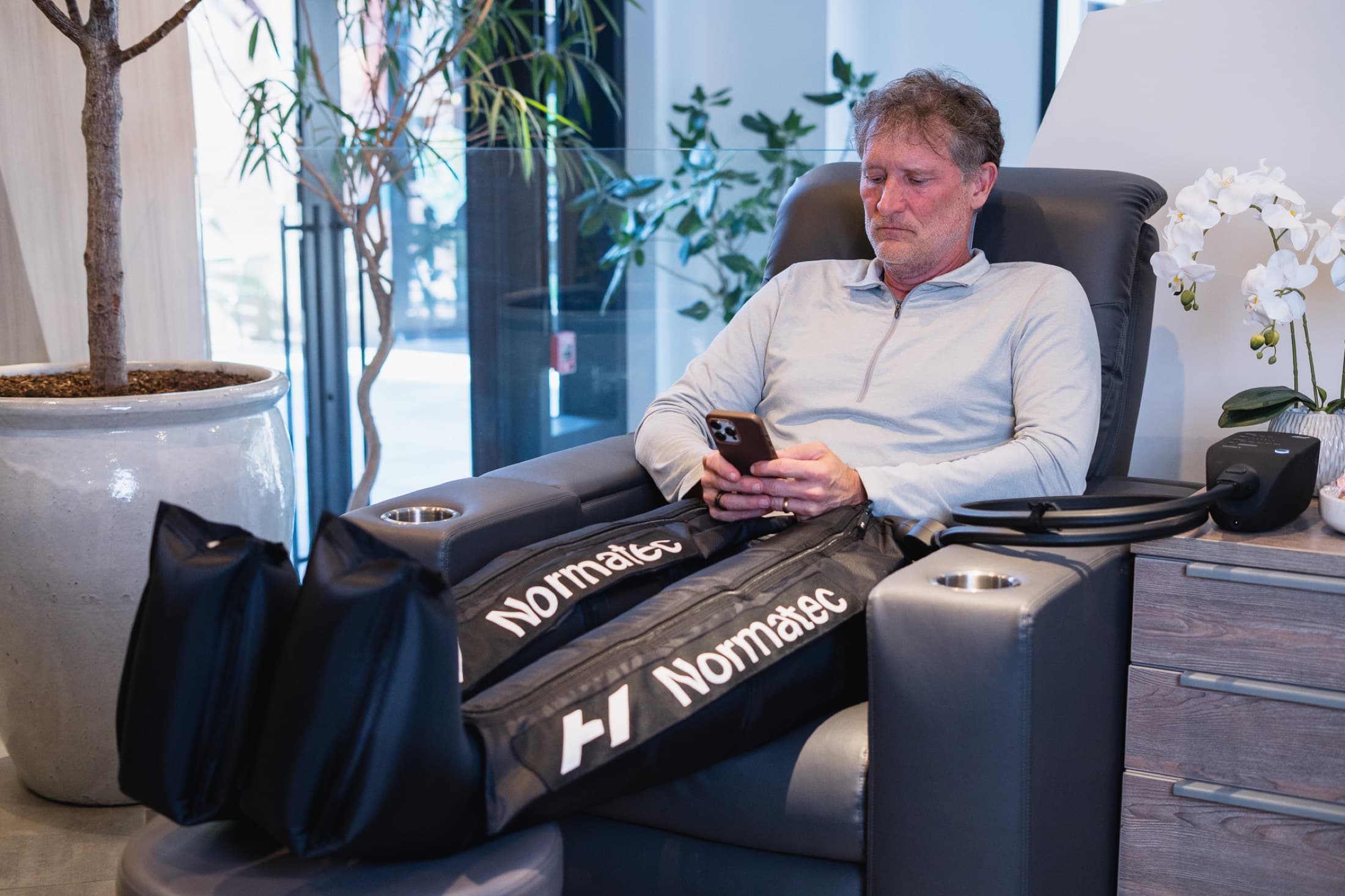
- Recovering on purpose, rather than only when you collapse.
- Reviewing the evidence — your evidence — and adjusting without drama.
None of these is dramatic. None of them photographs well. That is precisely why they work: they are sustainable, and sustainability is the only quality a longevity practice cannot do without.
A different relationship with time
The reframe I would offer is this. Stop asking what you can buy that will make you healthier. Start asking what you can repeat.
The first question leads to a shelf of half-used products and a faint sense of having been sold to. The second leads to a practice — something that belongs to you, that improves with attention, and that pays its dividends in the one currency that actually matters: years that feel worth having.
The practice begins the moment you decide to see your own biology clearly. Everything useful follows from that.